Working safely in extreme heat is extremely important to protecting the health and well-being of construction workers. High temperatures, combined with physical exertion and prolonged exposure to the sun, can lead to heat-related illnesses and even fatalities. Therefore, it is crucial to implement preventive measures and educate workers on how to work safely in these challenging conditions. Any temperature above 75 degrees or high humidity day can be hazardous for even acclimatized individuals.
Training
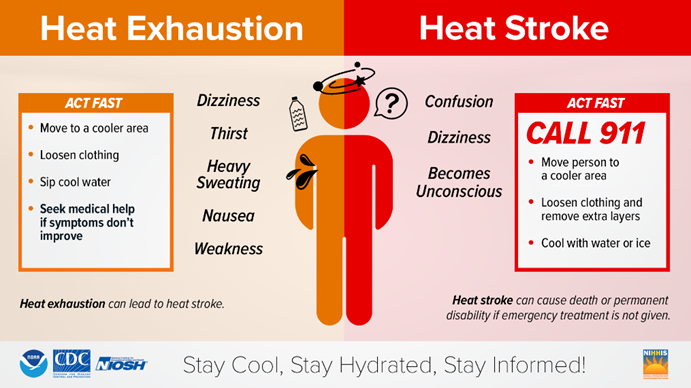
All workers should receive comprehensive training on recognizing the signs and symptoms of heat-related illnesses, such as heat exhaustion and heatstroke. They should understand the importance of hydration, rest breaks, and proper clothing to minimize the risks associated with extreme heat and know that other factors can increase the workers’ risk of heat illness. Medication, health problems, poor physical condition, pregnancy, lack of breeze, direct sun exposure, humidity, lack of recent exposure to hot working conditions, previous heat-related illness, and advanced age (65+) are just a few factors. Additionally, workers should have a working knowledge on how to administer first aid in case of heat-related emergencies.

Hydration
Employers should ensure that an adequate supply of cool, potable water is always readily available. Encouraging workers to drink water frequently, even before they feel thirsty, helps maintain hydration levels. Additionally, the consumption of sugary drinks or caffeine can contribute to dehydration.
How much water should you drink? OSHA guideline suggests 8 ounces every 15 to 20 minutes for moderate activity in moderately hot conditions, more should be consumed in activity level increases.
Proper Clothing & Gear
Workers should wear lightweight, breathable clothing that allows for sweat evaporation. Loose-fitting garments, preferably in light colors, can help reflect the sun’s rays and reduce heat absorption. It is also recommended to wear wide-brimmed hats or caps to protect the face and neck from direct sunlight. Don’t forget the SPF! Wearing sunscreen is another important measure to take when working outside.
Implementing a heat acclimatization plan is very important, especially during the initial days of exposure to extreme heat. This plan allows workers to gradually adapt to the conditions, reducing the risk of heat-related illnesses. New workers or those returning after an extended absence should have a lighter workload and more frequent breaks until they become acclimated.
Taking Breaks
Regular breaks and rest periods are essential for preventing heat-related illnesses. Frequent rest breaks in shaded or air-conditioned areas allow workers to cool down and rehydrate. These breaks should be scheduled at appropriate intervals and should not be rushed. Supervisors should monitor workers for signs of heat stress and encourage them to take breaks when needed.
Supervisors and coworkers play a vital role in ensuring safety on construction sites in extreme heat. They should be trained to recognize the signs of heat-related illnesses and know the appropriate actions to take. Encouraging a culture of looking out for one another and reporting any signs of distress can help prevent serious incidents.
Working safely on construction jobsites in extreme heat requires a combination of preventive measures, education, and monitoring. By providing training, adequate hydration, proper clothing, shade, and rest breaks, employers can significantly reduce the risk of heat-related illnesses. It is essential to prioritize the health and safety of workers and take proactive steps to mitigate the dangers associated with extreme heat on construction sites.
STAY COOL, STAY HYDRATED, and STAY INFORMED