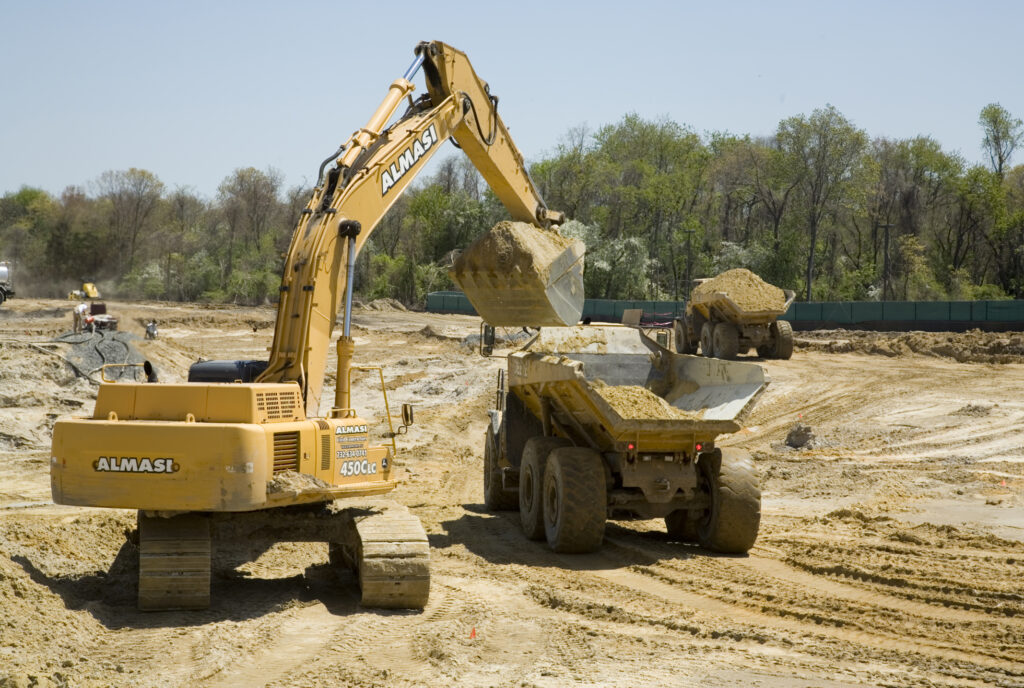
Successfully executed site work projects begin from the ground up. There are many factors that play an important role in determining the success of a project. As an owner taking on a new construction or major renovation project, you want to make sure everything runs smoothly and according to plan. There are four main factors that contribute to the success of your project.
Building a Winning Team
“If you fail to plan, you plan to fail.” This holds true with anything in life and especially applies to construction projects. Planning is essential to the success of a project.
The key to a successful, effective job is teamwork. It takes a well-coordinated team to complete a construction project and it takes a team to make sure everyone goes home the same way they arrived.
You need to make sure that your project has the necessary people, equipment, and materials from the start. You must also ensure that the job is organized and coordinated in a manner that is not haphazard.
Outline the tasks within the timeline noting project milestones, and the resources needed to do those tasks within the budget. Be transparent in your plan, so everyone is on the same page and understands what needs to be done over the life cycle of the project. That includes detailing the cost, scope, duration, quality, and communications used in the project.
Once you launch the project, you must take the plan and implement it, along with all the changes and issues that can arise during construction. The promised deliverables must come through in the timeframe you noted. Now you must deal with customers and the project team to insure a successful outcome. The job must be inspected and monitored for performance and quality assurance. This can be onsite, through video monitoring and daily reports. Regular communication and meetings with the field team is paramount.
Unforeseen Conditions
Unforeseen Conditions simply means that the conditions of the site differ from what really exists. For example, when starting a construction project, there may be a damaged or broken pipe underground that is unknown to the contractor. Buried foundations or other utilities may also be present. This discovery could only have been uncovered when the contractor started to dig to start the foundation. While we may not be able to control some of these situations, having the right professionals on your construction project team will help to navigate through these unforeseen conditions and remedy the situation in real time to minimize accidents or lost time on the job.
Scheduling
Keeping an accurate schedule is key to a successful project. Your schedule impacts your profitability and client’s satisfaction. It is important to keep the client in the loop if your schedule is impacted by unforeseen conditions or delays. It is better to be upfront as you go along than to promise a deadline that is not realistic and in the end no one is happy.
One of the most important factors of keeping a schedule is to have constant dialog with your crews and to involve them in your sequence and durations. Listen to feedback if the duration and sequence is realistic and adjust accordingly. This should occur when the schedule is developed and during any major changes that impact the schedule.
A team buy-in of the schedule will help make the project function seamlessly. An accurate schedule also helps with scheduling materials to arrive on site. There is no sense releasing structures or pipe that will not be installed for several months. The material will most likely be in the way and will be moved several times which costs time and money. On the other hand, not having the material to install when needed can be costly. In summary, the schedule should be realistic, be reviewed and accepted by the field, updated regularly, and followed by purchasing to ensure materials arrive on time.
Communication
Communication is the key to success on construction projects. Having regular meetings with all team members will help keep the job on schedule by communicating challenges and when milestones are hit. Regular communication can be in person, video conference or by phone.
Clearly communicate deliverable expectations and processes. Make sure the entire team understands the level of detail expected at each installation stage and produces deliverables that are the highest standards possible.
Develop strong relationships and a good reputation with jurisdictions. Know the rules thoroughly and follow them. If you need an exception, make sure your requests are reasonable, well- prepared, clearly communicated, and made in a timely fashion. This will help you develop a good reputation, so when you ask for an exception, it is likely to be received and seriously considered. Work with City officials, not against them, for the best solution for the project—that is what everyone wants, and you can usually help make that happen with a little extra effort, transparency, and preparation.
Coordinate all the trade documents. Conflicts most often happen at the edges of the consultants’ scopes, such as the MEP and civil edge, the architect and civil edge, and the landscape architect and civil edge. A review of all the trade documents can resolve these conflicts before the field begins installation and can be a significant cost savings.
As an owner, you want to make sure you are hiring the right team to meet your goals, expectations and purpose for your new building or space. Communicate with your potential team before the project even starts. Ask the right questions about scheduling and unforeseen conditions. Rely on your team of professionals to ensure the project will run smoothly from conception to closeout.